


September 4, 2026
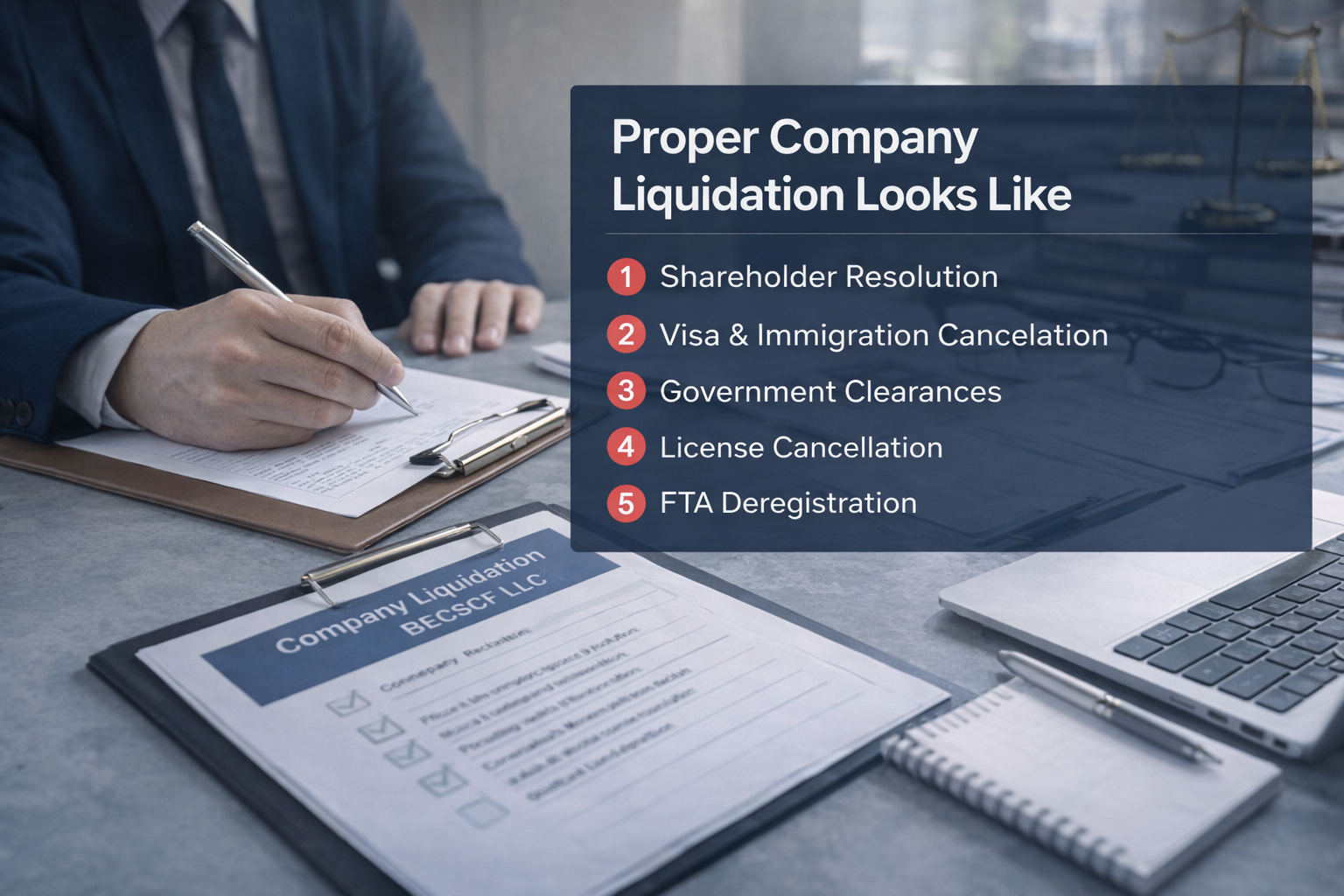
Why It Is Important to Liquidate a Company in the UAE the Right Way
February 24, 2026
For many business owners, closing a company may seem as simple as allowing the trade license to expire. In the UAE, this approach can quickly lead to serious consequences. Once a license expires without proper liquidation, penalties begin to accrue - not only from the licensing authority, but also from the Federal Tax Authority (FTA) and, where applicable, other compliance bodies. These penalties often increase monthly and, if left unresolved, may escalate into legal action, potentially exposing the General Manager or authorized signatory to personal liability. What starts as an administrative oversight can therefore become a significant legal and financial issue.
A company that is not properly liquidated does not simply disappear - it continues to exist in regulatory systems, accumulating penalties, compliance risks, and reputational exposure. Proper liquidation is therefore not just an administrative formality, but a critical step in protecting both the company and its management.
A License Expiry Does Not Mean a Company Is Closed
In many jurisdictions, ceasing business activity may be enough to conclude operations. In the UAE, however, a company remains active until it is formally cancelled through the relevant authority.
When a license expires without cancellation:
- Government penalties and late renewal fees may continue to accrue
- Immigration files linked to the company remain active
- Bank accounts and financial obligations may remain unresolved
- Tax registrations with the Federal Tax Authority remain in force
This means that business owners who walk away from a company without liquidation may face complications months or even years later.
The UAE Regulatory Framework Requires Structured Closure
The UAE’s regulatory environment is designed to support a dynamic business ecosystem. At the same time, it requires companies to formally conclude their presence when operations cease.
A proper liquidation process typically includes:
- Shareholder resolutions confirming the decision to close
- Cancellation of employee visas and immigration files
- Clearance from government departments and service providers
- Settlement of liabilities and preparation of liquidation documentation
- Trade license cancellation with the relevant authority
- VAT and Corporate Tax deregistration with the Federal Tax Authority
Each step ensures that the company exits the market in a transparent and compliant manner.
Immigration Considerations Make Liquidation Essential
One of the key differences between the UAE and many other countries lies in its immigration structure. Companies often sponsor employees, investors, or dependents through their corporate licenses. Because of this, closing a business involves more than commercial deregistration - it requires proper handling of visas, labor files, and immigration records.
Failure to cancel these elements correctly may result in:
- Immigration fines
- Restrictions on future visa applications
- Delays in opening new companies or transferring ownership
Proper liquidation ensures that all individuals connected to the entity are released from regulatory obligations.
Tax Deregistration Is a Critical Final Step
With the introduction of VAT and Corporate Tax in the UAE, liquidation has taken on an additional layer of importance.
Companies must formally apply for tax deregistration once business activities cease. The Federal Tax Authority will review the company’s filings, financial history, and compliance status before approving closure.
If tax deregistration is ignored:
- Administrative penalties may apply
- The company may remain liable for reporting obligations
- Shareholders and managers could face ongoing compliance exposure
A structured liquidation ensures that the financial chapter of the business is closed cleanly and defensibly.
Protecting Reputation and Future Opportunities
For entrepreneurs and investors, the UAE is often a long-term business base. Closing a company properly protects future opportunities - whether that means launching a new venture, restructuring ownership, or expanding into new sectors.
A compliant exit demonstrates professionalism and strengthens relationships with regulators, banks, and partners.
Conclusion
When viewed correctly, liquidation in the UAE is not simply about ending a business - it is about closing a chapter responsibly and protecting what comes next. Allowing a license to lapse without proper cancellation can expose shareholders and management to accumulating penalties, regulatory complications, and long-term compliance risks. A structured liquidation ensures a clean financial, legal, and immigration exit, allowing business owners to move forward with clarity and confidence.
If your company is no longer active, or you are considering restructuring or exiting the UAE market, now is the right time to review your liquidation strategy. Our team at Onecentive can guide you through each stage - from regulatory clearances and visa cancellations to FTA deregistration - ensuring the process is handled correctly from start to finish.
Reach out to us to discuss your situation and secure a compliant, stress-free closure.
📧 info@one-centive.com
🌐 www.one-centive.com
📍 Office 508, The Binary by Omniyat, Business Bay, Dubai, UAE
Onecentive LLC-FZ is licensed under Meydan Free Zone, Dubai, UAE. This article is for informational purposes only and does not constitute legal or financial advice.
#CompanyLiquidation #UAECompliance #CorporateTaxUAE #BusinessInUAE #DubaiBusiness #CorporateServices #Onecentive
August 18, 2026


%203%20png.webp)